Cystic fibrosis couldn't stop me rowing the Atlantic

A woman with a genetic illness that affects her ability to breathe has completed a world record-breaking rowing challenge in the Atlantic Ocean.
Sophie Pierce, 32, of Neyland Rowing Club in Pembrokeshire, is the first person with cystic fibrosis to brave the journey.
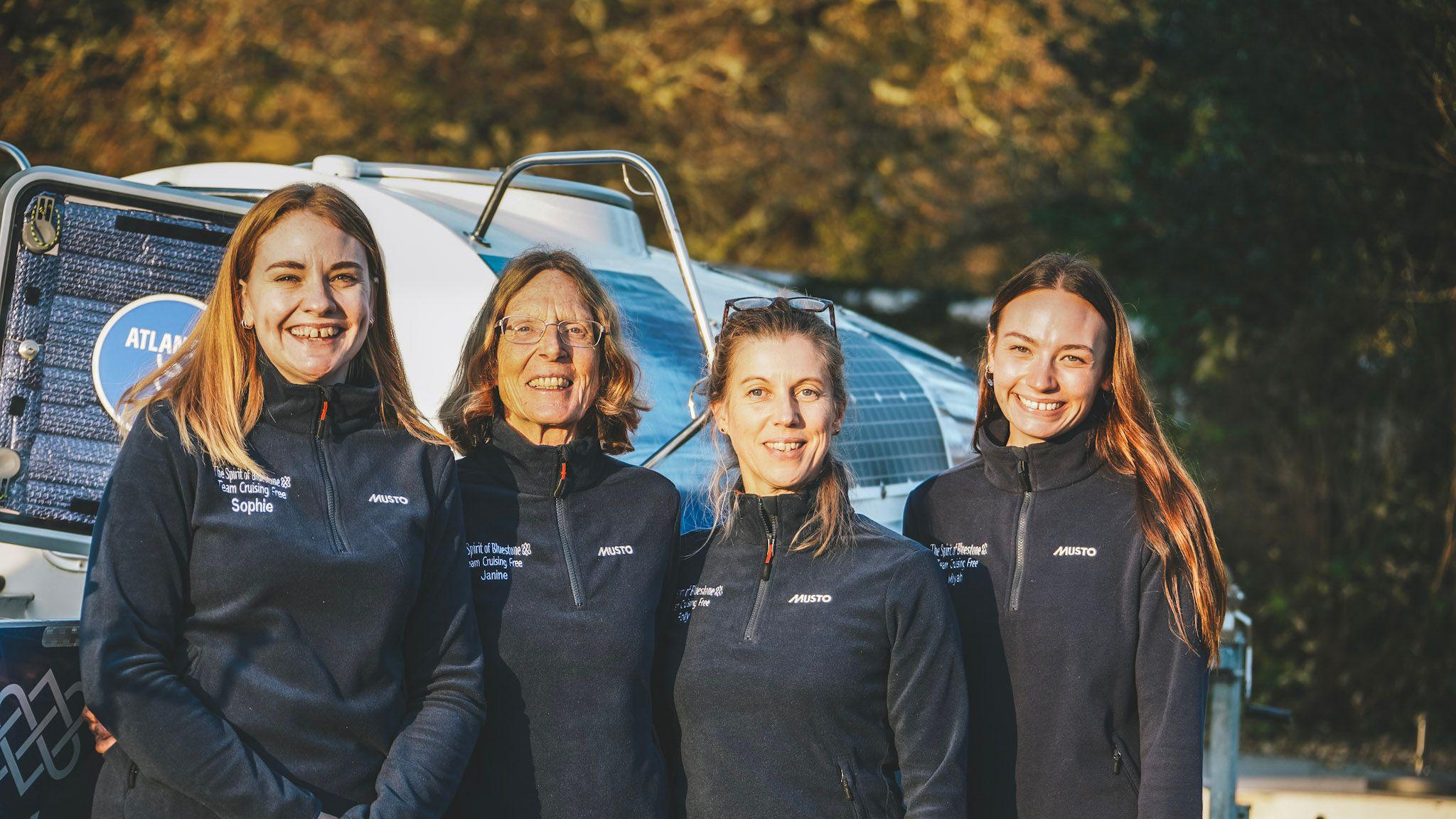
She was joined by three women from the club who set out on the 3,200 (5,150km) mile row from Lanzarote to Antigua in January, and they reached their goal on Thursday night, a week ahead of schedule.
Ms Pierce said the 53-day journey had been "incredibly tough" but "empowering".
"If you had told me five years ago that I would be standing here in Antigua after rowing an ocean, I would have laughed," Ms Pierce said.
She previously said she had become determined to make the most of her time after realising her illness might limit her life.
"I hope this challenge not only inspires others with cystic fibrosis to push boundaries but also helps reimagine the future," she added.
Janine Williams, 70, who also smashed the world record of being the oldest person to row the ocean, said it had been "an adventure of a lifetime".
"People kept asking if I was worried about rowing at 70, but I never doubted we could do it. You're never too old to take on something extraordinary," she said.
They were also joined by Polly Zipperlen, 50, and Miyah Periam, 24, and have raised £20,000 for their chosen charities.
The team rowed in shifts and only stopped to eat or shelter from big waves.
Ms Periam said it was harder than she ever imagined and Ms Zipperlen added that the ocean tested them "in every way possible".
They survived on dehydrated meals and used a water desalination machine, and carried a fridge for Ms Pierce's cystic fibrosis medication.
"This wasn't just about rowing," Ms Zipperlen added, "it was about proving what's possible when you work together and refuse to give up".
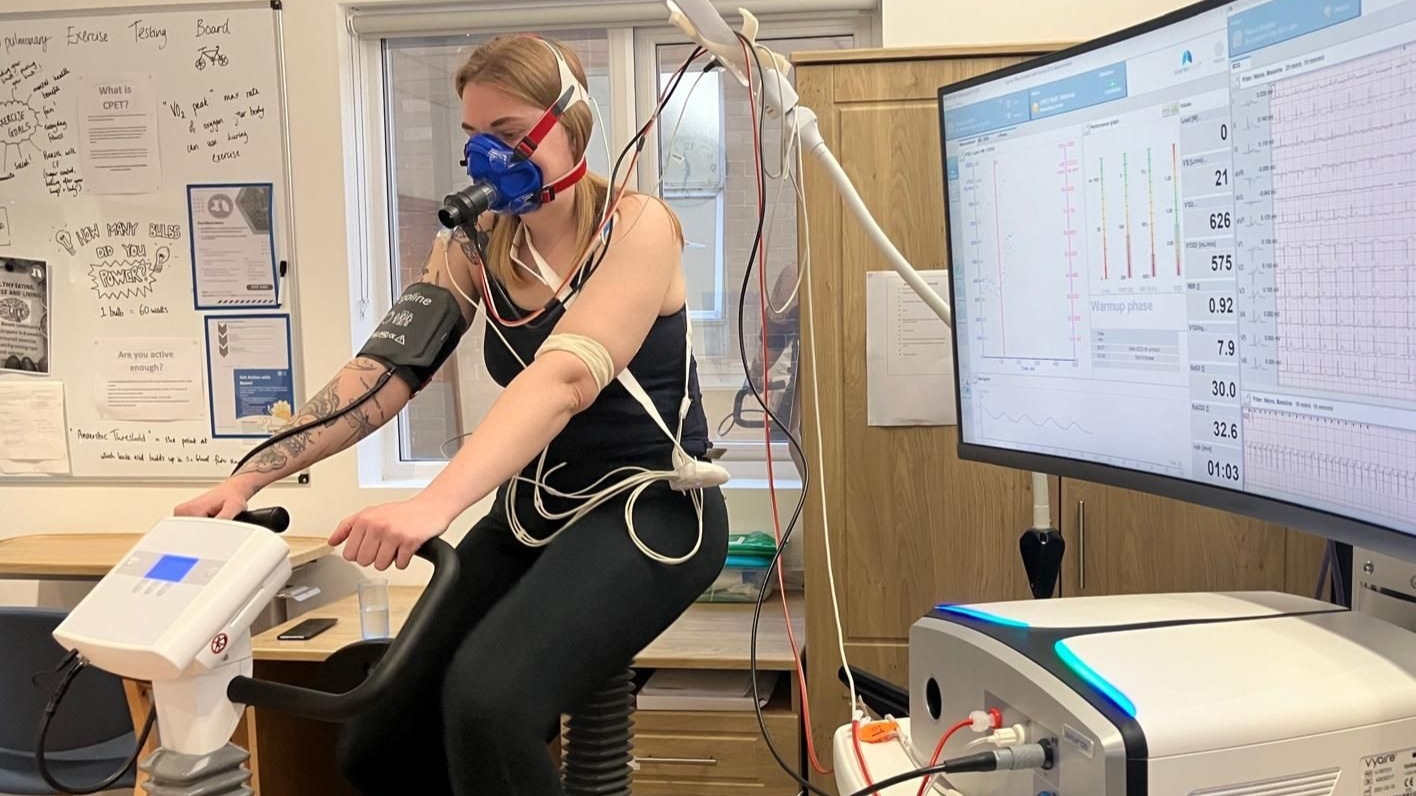
Despite being diagnosed as a baby, it was from a hospital bed as a teenager that Ms Pierce found out that the life expectancy for someone with the condition was "early thirties... and I remember feeling really shocked by that".
She added: "If I wasn't going to be here for a long time, I was going to make it a good time."
Ms Pierce has also climbed Kilimanjaro, Africa's highest peak, and hiked the length of Offa's Dyke and Hadrian's Wall.
At her lowest point, her lung function dropped to 55% of how a person's of her age should be working and needed "one or two hours of physiotherapy a day, was taking over 30 tablets a day and I was having monthly hospital appointments".
A massive turning point happened when Ms Pierce received an invitation to take part in a clinical trial and, despite not knowing whether she had been given the drug or a placebo, she noticed a difference immediately.
"On the way home, I remember feeling something change in my chest but thought it was in my mind," she said.
Ms Pierce's lung function improved dramatically - from 55% to 71% - her condition is now much more stable and her visits to hospital less frequent.


Comments
Post a Comment